For years, the narrative around Asian tech startups centered on Singapore, Shenzhen, and Bangalore. Hong Kong was seen as a finance city — great for banking, less so for building the next big app. That perception has shifted dramatically. Hong Kong's startup ecosystem now counts over 4,200 startups employing more than 15,000 people, with particular strength in fintech, logistics-tech, and AI.
The Two Hubs
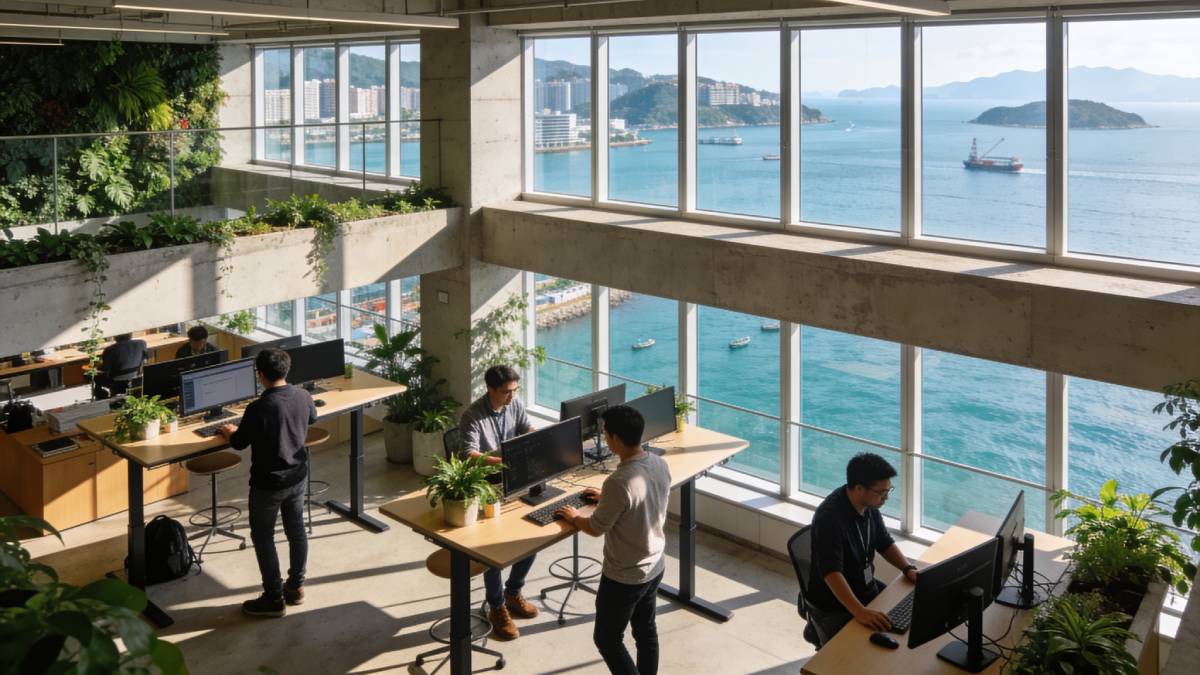
Cyberport, built into the hillside overlooking Telegraph Bay on the south side of Hong Kong Island, is a dedicated tech campus housing over 1,900 startups and tech companies. It offers subsidized office space, incubator programs, and a co-investment fund that has deployed hundreds of millions into early-stage companies. Fintech is the specialty — companies like WeLab (virtual banking) and Airwallex (cross-border payments) grew up in or around the Cyberport ecosystem.
Hong Kong Science and Technology Parks (HKSTP) in Sha Tin is the larger and older hub, focused on biotech, electronics, and green technology. Its Incu-Tech and Incu-Bio programs provide lab space and prototyping facilities that would be prohibitively expensive for startups to build independently.
Funding & Infrastructure
The funding landscape has deepened considerably. Alibaba's Hong Kong Entrepreneurs Fund, HongShan (formerly Sequoia China), and local firms like Gobi Partners and Vectr Ventures provide capital across stages. The Hong Kong Stock Exchange's 2018 listing reforms — allowing pre-revenue biotech companies and dual-class share structures — gave local startups a viable public exit path without needing to list in New York.
Why Hong Kong
For founders, the practical advantages are hard to ignore: company incorporation takes a single day, the corporate tax rate is 8.25% on the first HK$2 million of profits, and the GMT+8 time zone allows same-day overlap with both Asian markets and European afternoons. The city is compact, safe, endlessly interesting, and connected by one of the world's best public transit systems. The challenges are real — high rents, a small domestic market, geopolitical uncertainty — but for startups with regional ambitions, Hong Kong offers a launchpad few cities can match.