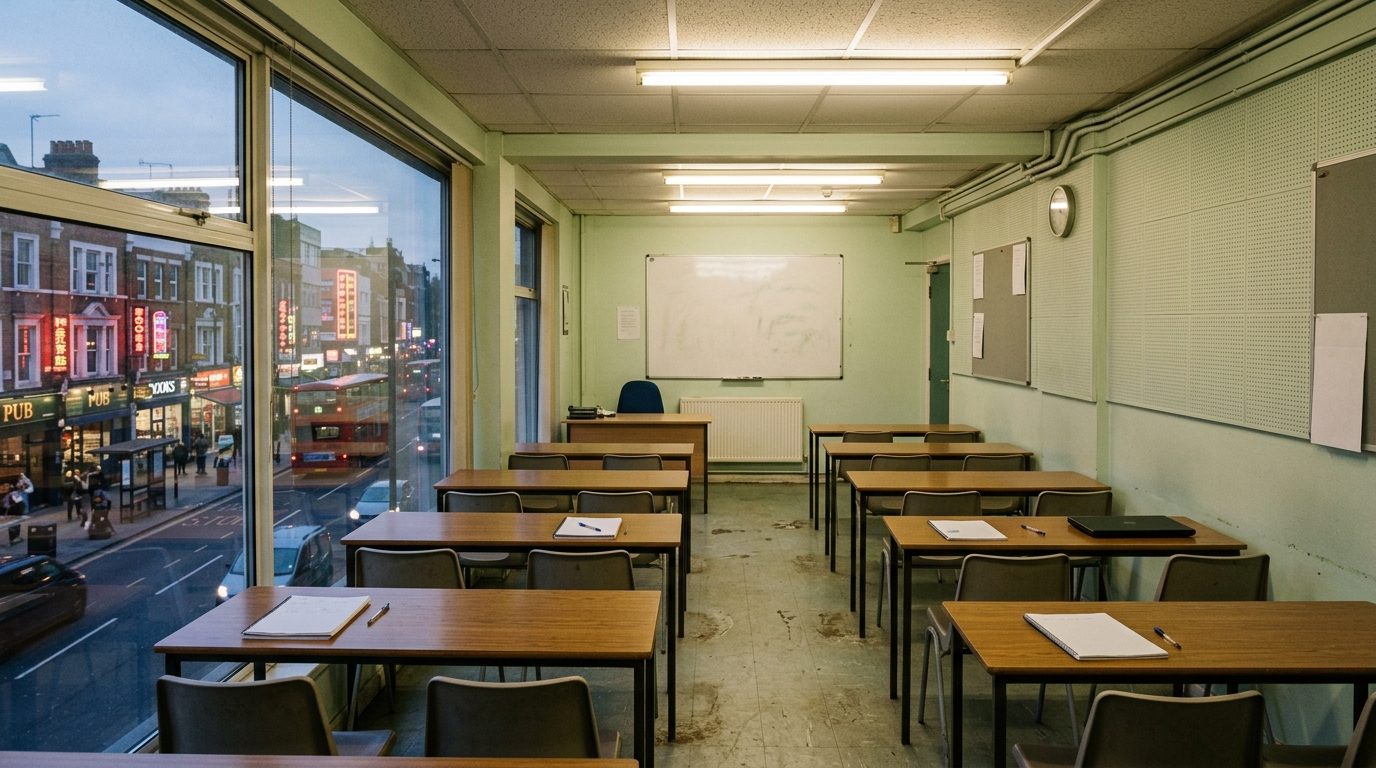
Quick Answer: Any Hong Kong tutorial centre teaching 20 or more people in a day, or 8 at any one time, is a school under the Education Ordinance and must be registered with the Education Bureau. Registered centres have their approved fees published by the EDB as a fees certificate: a Secondary 6 single-subject DSE course at Beacon College is HK$980 a month for 12 months. One-to-one tutoring is priced by the hour and runs far higher.
A tutorial centre in Hong Kong is legally a school. Under the Education Ordinance any institution providing educational courses for 20 or more people during any one day, or 8 or more at any one time, must be registered or provisionally registered with the Education Bureau, and the certificate has to be displayed on the premises. Registration also makes group prices public: the EDB publishes each registered centre's approved fee schedule as a fees certificate, and a single-subject Secondary 6 DSE course at Beacon College runs at HK$980 a month for 12 months. One-to-one tutoring is priced by the hour and starts around HK$760. This guide covers why the market exists, the legal position, how to check the register, what 2026 prices look like and what to ask before paying. Providers are listed under education, professional training and adult learning on Portal Hong Kong.
Why does Hong Kong have so much tutoring?
The Diploma of Secondary Education is a single high-stakes examination taken once, and it controls access to publicly funded degrees. The Hong Kong Examinations and Assessment Authority's 2026 HKDSE results release records 58,487 registered candidates, up about 5.4% on 2025, of whom 43,534 were day school candidates from 416 schools. Of those day school candidates, 15,973, about 36.8%, met the minimum entrance requirement for a local undergraduate degree. Private candidates, many of them retaking, rose 19.5% to 12,143. International-stream families add a second demand, for IGCSE and IB Diploma support in English.
Does a tutorial centre have to be registered?
Yes. The Education Bureau's guidance on private schools offering non-formal curriculum confirms that tutorial, language, commercial and computer course providers all fall in that category, and that every school must be registered. Three practical consequences follow:
- The certificate of registration or provisional registration must be displayed in a conspicuous place, and courses may be conducted only at the address on the certificate.
- Course fees must be displayed at the premises, including the monthly fee and the number of instalments, and a course leaflet must set out fee, duration, dates, venue, teachers and the refund policy.
- Fees must be collected on an equal monthly basis. The first instalment may be taken no earlier than one month before the course starts; everything after that is due on or after the first school day of each month. The Bureau says plainly that fees should not be paid in a lump sum by any means, including a credit card.
Since 1 July 2004 these schools have been exempt from certain provisions of the Ordinance and Regulations on fees, employment of teachers, teachers' qualifications, principals, holidays and hours of instruction, under the Education (Exemption) Order. The exemption is conditional, and the monthly-instalment and receipt rules above are among the conditions that still bite. What registration does not check is teaching quality.
How do you check a centre is registered?
Search the EDB's School Information Search by English name, Chinese name, school number, registration number or district. Two things to expect. First, chains register each branch and each session separately, so a search for Beacon College returns 20 records covering Mong Kok, Causeway Bay, Kowloon Bay and Sha Tin in morning, afternoon and evening sessions. Second, a school number on a provider's website should resolve to the same address: searching 586242 returns ETS Education Centre at Room 304, Lap Fai Building, 6-8 Pottinger Street, Central, which matches the address on its own site. The Bureau separately publishes records of contraventions and convictions for unregistered schools and for registered ones that have broken the Ordinance.
What does tutoring cost in 2026?
Group prices are public because the EDB publishes the approved fee schedule. The figures below are from Beacon College's own EDB fees certificate for its Mong Kok school and from ETS Education Centre's price page, both checked 16 September 2026.
| Format | Course | 2026 price |
|---|---|---|
| Group, DSE single subject | Secondary 5 tutorial course, any one subject | HK$910 a month, 12 instalments (HK$10,920) |
| Group, DSE single subject | Secondary 6 tutorial course, any one subject | HK$980 a month, 12 instalments (HK$11,760) |
| Group, one session | Personalised enhancement class, any one subject | HK$1,200 |
| Full-time day course | Secondary 5, four core subjects plus two or three electives | HK$4,780 a month, 11 instalments (HK$52,580) |
| Small group | IB, A level and test preparation | HK$580 an hour |
| One-to-one | Secondary to IGCSE / IB and A level | HK$820 and HK$880 an hour |
The celebrity-tutor chains sit at the group end of that table. They advertise named star tutors, run the same course across many branches and sessions, and charge the certificate rate rather than anything negotiated: Beacon College alone holds 20 separate registrations covering Mong Kok, Causeway Bay, Kowloon Bay and Sha Tin in morning, afternoon and evening sessions. No official body publishes average one-to-one rates in Hong Kong, so treat any single headline hourly figure as one provider's list price rather than a market rate.
What should you ask before paying?
Ask for the school number and check it on the EDB search before you hand over money. Confirm the class is taught at the registered address, and look for the fees certificate and the notice of permitted classroom accommodation, which tells you the maximum class size for that room. Insist on monthly instalments and a proper receipt showing the registered school name, the student's name, the course and venue, the month covered, the amount and the school chop, with the supervisor's endorsement. Ask who actually teaches the class rather than who appears in the advertising, since qualification rules do not apply here. For adult language study the same registration rules apply; see language schools and Cantonese and Mandarin for adults. For the curricula the tutoring supports, see IB schools in Hong Kong and British curriculum schools in Hong Kong.
Frequently asked questions
- Do tutorial centres in Hong Kong need a licence?
- They need registration, not a licence. Under the Education Ordinance a "school" is any institution providing educational courses for 20 or more people during any one day, or 8 or more at any one time, and every school must be registered or provisionally registered with the Education Bureau. Tutorial, language, commercial and computer course providers are classed as private schools offering non-formal curriculum. The certificate of registration must be displayed at the premises, and courses may only run at the address on it.
- How do I check a tutorial centre is registered?
- Use the Education Bureau's School Information Search for private schools offering non-formal curriculum. You can search by English or Chinese name, school number, registration number or district. Searching school number 586242, for example, returns ETS Education Centre at Room 304, Lap Fai Building, 6-8 Pottinger Street, Central, registered for morning, afternoon and evening sessions. The EDB also publishes records of contraventions of the Education Ordinance and convictions for unregistered schools.
- How much does DSE tutoring cost in 2026?
- Fees at registered centres are published by the EDB as a fees certificate. Beacon College's Mong Kok certificate, effective 1 July 2026, sets a single-subject Secondary 5 tutorial course at HK$910 a month over 12 instalments and Secondary 6 at HK$980 a month, so HK$10,920 and HK$11,760 for the year. A personalised one-session enhancement class is HK$1,200. Its full-time day course covering four core subjects plus two or three electives is HK$4,780 a month at Secondary 5.
- How much is a private one-to-one tutor in Hong Kong?
- There is no regulated price for one-to-one tuition and no official figure. Providers publish their own rates: ETS Education Centre in Central lists HK$760 an hour for individual primary tuition, HK$820 for secondary up to IGCSE and HK$880 for IB, A level and test preparation, with small-group rates of HK$520 to HK$580 an hour, checked 16 September 2026. Agency rates vary with the tutor's experience, the subject and travel, so ask what is included.
- Can a tutorial centre ask me to pay a year upfront?
- No. Under the Education Regulations the inclusive fee for an educational course must be calculated on an equal monthly basis and collected on or after the first school day of each month. The only exception is the first instalment, which may be taken to register, but no earlier than one month before the course starts. The Education Bureau tells students and parents not to pay course fees in a lump sum by any means, including a credit card.
- What should the receipt from a tutorial centre show?
- The Education Bureau requires a proper receipt for every payment. It should carry the registered school name and address, the student's name, the course name or code and venue, the month the fee covers, and the date and amount collected. It should bear the school chop and be endorsed by the supervisor of the school. Keep it: it is your proof of enrolment and what you need if you later claim a refund.
- Why is tutoring so common in Hong Kong?
- The Diploma of Secondary Education is the gate to publicly funded degrees, and it is competitive. In 2026, 58,487 candidates registered for the HKDSE, and of the 43,534 day school candidates from 416 schools, 15,973 met the minimum entrance requirement for a local undergraduate degree, about 36.8%. Private candidates rose 19.5% on 2025 to 12,143. That combination of a single high-stakes examination and limited degree places is what sustains the tutorial industry.
- Are tutorial centre teachers required to be qualified?
- Not in the way school teachers are. Since 1 July 2004, private schools offering non-formal curriculum have been exempt from the provisions of the Education Ordinance and Education Regulations on fees, employment of teachers, teachers' qualifications, principals, holidays and hours of instruction, subject to the conditions in the Education (Exemption) Order. Registration therefore confirms premises, address and approved fees, not teaching credentials, so ask about experience and results directly.