Quick Answer: Dim sum is sold by the portion, and in 2026 that runs from about HK$78 for three pieces at a Michelin-starred room in Central to set dim sum lunches at HK$488 and HK$588 a head, plus a HK$38 tea charge and 10 per cent service. The MICHELIN Guide Hong Kong & Macau 2026 lists 219 Hong Kong restaurants, 70 of them Bib Gourmand, and files two of them under dim sum.
Dim sum in Hong Kong is priced by the portion, and in 2026 a portion of three pieces runs from about HK$78 at a Michelin-starred dining room in Central, with set dim sum lunches at HK$488 and HK$588 a head, a Chinese tea charge of HK$38 a person and a 10 per cent service charge on top. The MICHELIN Guide Hong Kong & Macau 2026, announced on 25 March 2026, covers 219 Hong Kong restaurants, 70 of them Bib Gourmand. This guide explains what yum cha is, how ordering works, the dishes to know, what each price tier costs, which dim sum addresses the Guide recognises, and the charges that land at the bottom of the bill. Places to eat are listed under dim sum, Cantonese and Hong Kong cuisine on Portal Hong Kong.
What is yum cha and how does ordering work?
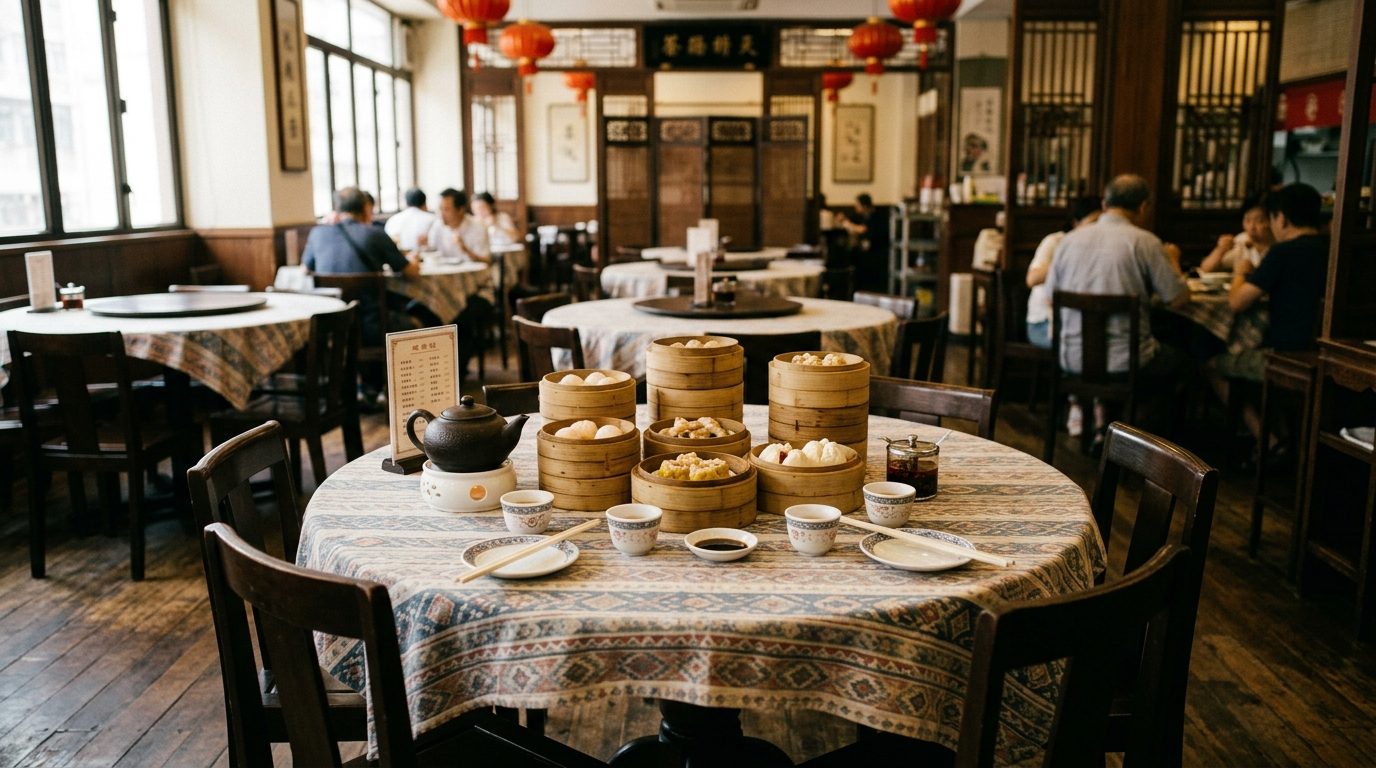
Yum cha means drink tea, and it is the name of the meal. Dim sum are the small steamed, fried and baked plates eaten during it. A table orders a pot of tea first, then dishes, either from a trolley pushed between tables at the older houses or from a paper tick sheet handed over at the door. Dim sum is sold by the portion rather than by the dish, and the menu states the count: Duddell's lists its prawn dumplings at three pieces a portion, while Dim Sum Library sells its siu mai in fours. Baskets arrive as they come out of the steamer, and more can be added at any point in the meal. Old teahouses such as Luk Yu Tea House in Central keep the trolley and the shared-table habit; newer rooms take bookings and hand out a menu.
Which dishes should you order?
The standards are har gow, steamed prawn dumplings in a translucent wrapper; siu mai, open pork and prawn dumplings; char siu bao, barbecued pork buns either steamed or with a baked sugar crust; cheung fun, rice rolls filled with prawn, beef or fried dough; lo mai gai, glutinous rice with chicken in a lotus leaf; turnip cake; taro puffs; chicken feet in black bean sauce; steamed spare ribs; and egg tarts to finish. Kitchens at the top of the market rework the same shapes rather than replacing them. The Dim Sum Library lunch menu runs a black truffle har gau, a black garlic siu mai and a turnip cake with Parma ham, and the Duddell's lunch menu puts a goldfish-shaped dumpling next to the classic prawn one. For the cheaper end of Hong Kong eating, the street food crash course covers what sits outside the teahouse.
How much does dim sum cost in 2026?
| Restaurant | Item | Published price, checked 16 September 2026 |
|---|---|---|
| Dim Sum Library, Pacific Place | Black truffle har gau, 3 pieces | HK$78 |
| Dim Sum Library, Pacific Place | Black garlic siu mai, 4 pieces | HK$88 |
| Dim Sum Library, Pacific Place | Pan-fried turnip cake with Parma ham, 3 pieces | HK$92 |
| Dim Sum Library, Pacific Place | Afternoon dim sum, daily 2pm to 5.30pm | from HK$338 per guest |
| Duddell's, Central (one MICHELIN Star) | Har gow, 3 pieces | HK$88 |
| Duddell's, Central | Char siu bao with crisp top, 3 pieces | HK$78 |
| Duddell's, Central | Rice roll, plain | HK$78 |
| Duddell's, Central | Set dim sum lunch | HK$488 or HK$588 per person |
| Duddell's, Central | Chinese tea | HK$38 per person |
Both menus state that prices carry a 10 per cent service charge. The cheap tier is harder to pin down: neighbourhood teahouses and the trolley houses largely do not publish menus online, and many change prices between the morning, lunch and afternoon sessions, so no verified 2026 figure for that tier is quoted here. Ask at the door which session is running before sitting down.
Which dim sum addresses does the MICHELIN Guide recognise?
The 18th edition of the Guide, released on 25 March 2026, lists 219 Hong Kong restaurants: 7 with three stars, 13 with two, 57 with one and 70 with a Bib Gourmand. Two of the seven three-star kitchens are Cantonese, Forum and T'ang Court. The two-star Cantonese group includes Lung King Heen, Lai Ching Heen, Run, Tin Lung Heen and Ying Jee Club. The one-star Cantonese list runs to a dozen names, among them Duddell's, Fook Lam Moon in Wan Chai, Man Wah, Seventh Son, Shang Palace, Spring Moon, Summer Palace, The Chairman and Yat Tung Heen, with China Tang new this year. Portal Hong Kong also lists Cantonese dim sum rooms in Tsim Sha Tsui such as Yan Toh Heen. In the Bib Gourmand section the Guide files exactly two entries under dim sum: Tim Ho Wan in Sham Shui Po and Lulu Baobao in Wong Chuk Hang. Tim Ho Wan's own site records that it was awarded one Michelin star and that its founder came from the Lung King Heen kitchen. Browse the Michelin, Michelin star and Bib Gourmand pages, or the wider restaurant and dining sections.
What do the tea charge and the service charge add?
Two lines sit outside the menu price. The first is tea, charged per head rather than per pot, which at Duddell's is HK$38 a person for Chinese tea. The second is service, and both the Duddell's and the Dim Sum Library menus print that prices are subject to a 10 per cent service charge. On a HK$600 order for two people that is HK$60 of service plus the tea before anything else. Read the footer of the menu, which is where both charges are stated.
When is dim sum served, and when is it busiest?
Dim sum is a daytime meal. Duddell's serves lunch from noon to 3pm every day with last orders at 2.30pm. Dim Sum Library opens at 11.30am from Monday to Friday and an hour earlier, at 10.30am, on Saturdays, Sundays and public holidays, and runs its afternoon dim sum daily from 2pm to 5.30pm. That earlier weekend opening is the tell: family yum cha lands late morning at the weekend, so book if the restaurant takes bookings and go either early or after 2pm if it does not. District guides to Central, Sheung Wan and Mong Kok cover what else is nearby, and Sheung Wan listings sit a short walk from the Central dining rooms.
Frequently asked questions
- What is yum cha?
- Yum cha means drink tea and is the name of the meal; dim sum are the small plates eaten during it. A table orders a pot of tea first, then dishes, either from a trolley at the older teahouses or from a paper tick sheet at newer rooms. Dim sum is sold by the portion, usually three or four pieces, and the menu states the count. Baskets arrive as they come out of the steamer, and more can be ordered at any point.
- How much does dim sum cost in Hong Kong?
- At the Michelin-starred end, Duddell's in Central publishes har gow at HK$88 for three pieces, char siu bao at HK$78 for three and set dim sum lunches at HK$488 and HK$588 per person, with Chinese tea at HK$38 a head. Dim Sum Library at Pacific Place publishes a black truffle har gau at HK$78 for three and black garlic siu mai at HK$88 for four, with afternoon dim sum from HK$338 a guest. Both menus add 10 per cent service. Prices checked September 2026.
- Is there a tea charge at dim sum in Hong Kong?
- Yes, tea is charged per person rather than per pot and appears as its own line on the bill. Duddell's prints Chinese tea at HK$38 a person on its published lunch menu. A service charge is separate: the Duddell's and Dim Sum Library menus both state that prices are subject to a 10 per cent service charge. Both charges are printed in the menu footer, so check there before ordering rather than at the till.
- Which dim sum restaurants have Michelin stars in Hong Kong?
- The MICHELIN Guide awards stars to Cantonese restaurants rather than to a separate dim sum category. In the 2026 selection, Forum and T'ang Court hold three stars; Lung King Heen, Lai Ching Heen, Run, Tin Lung Heen and Ying Jee Club hold two; and the one-star Cantonese list includes Duddell's, Fook Lam Moon in Wan Chai, Man Wah, Seventh Son, Shang Palace, Spring Moon, Summer Palace, The Chairman, Yat Tung Heen and China Tang, which is new this year.
- What is a Bib Gourmand dim sum place?
- Bib Gourmand is the MICHELIN Guide's mark for good cooking at a moderate price, separate from the stars. The 2026 Hong Kong and Macau selection has 83 Bib Gourmand entries, 70 of them in Hong Kong. Only two are filed by the Guide under dim sum: Tim Ho Wan in Sham Shui Po and Lulu Baobao in Wong Chuk Hang. The rest of the Hong Kong Bib Gourmand list is largely Cantonese, noodles, congee and roast meats.
- What should I order at dim sum?
- The standards are har gow, steamed prawn dumplings; siu mai, open pork and prawn dumplings; char siu bao, barbecued pork buns steamed or with a baked sugar crust; cheung fun rice rolls; lo mai gai, glutinous rice with chicken in a lotus leaf; turnip cake; taro puffs; chicken feet in black bean sauce; steamed spare ribs; and egg tarts at the end. Higher-end kitchens rework the same shapes rather than dropping them.
- When is the best time to go for dim sum?
- Dim sum is a daytime meal. Duddell's serves lunch from noon to 3pm daily with last orders at 2.30pm. Dim Sum Library opens at 11.30am Monday to Friday and at 10.30am on Saturdays, Sundays and public holidays, and serves afternoon dim sum daily from 2pm to 5.30pm. That earlier weekend opening reflects when family yum cha happens, so either book, arrive early, or go after 2pm at places that do not take bookings.
- Do neighbourhood teahouses publish their prices?
- Mostly not. Local teahouses and the surviving trolley houses rarely put a menu online, and many charge different rates for the morning, lunch and afternoon sessions, so a published 2026 figure for that tier is not available to quote. Ask at the door which session is running and what the tea and service charges are before sitting down, since both are added to whatever the baskets cost.